Audiobook Translation: How to Publish Your Audiobook in New Languages
Nina Kovacs
Localization Strategy
June 7, 2026
15 min
In Kürze
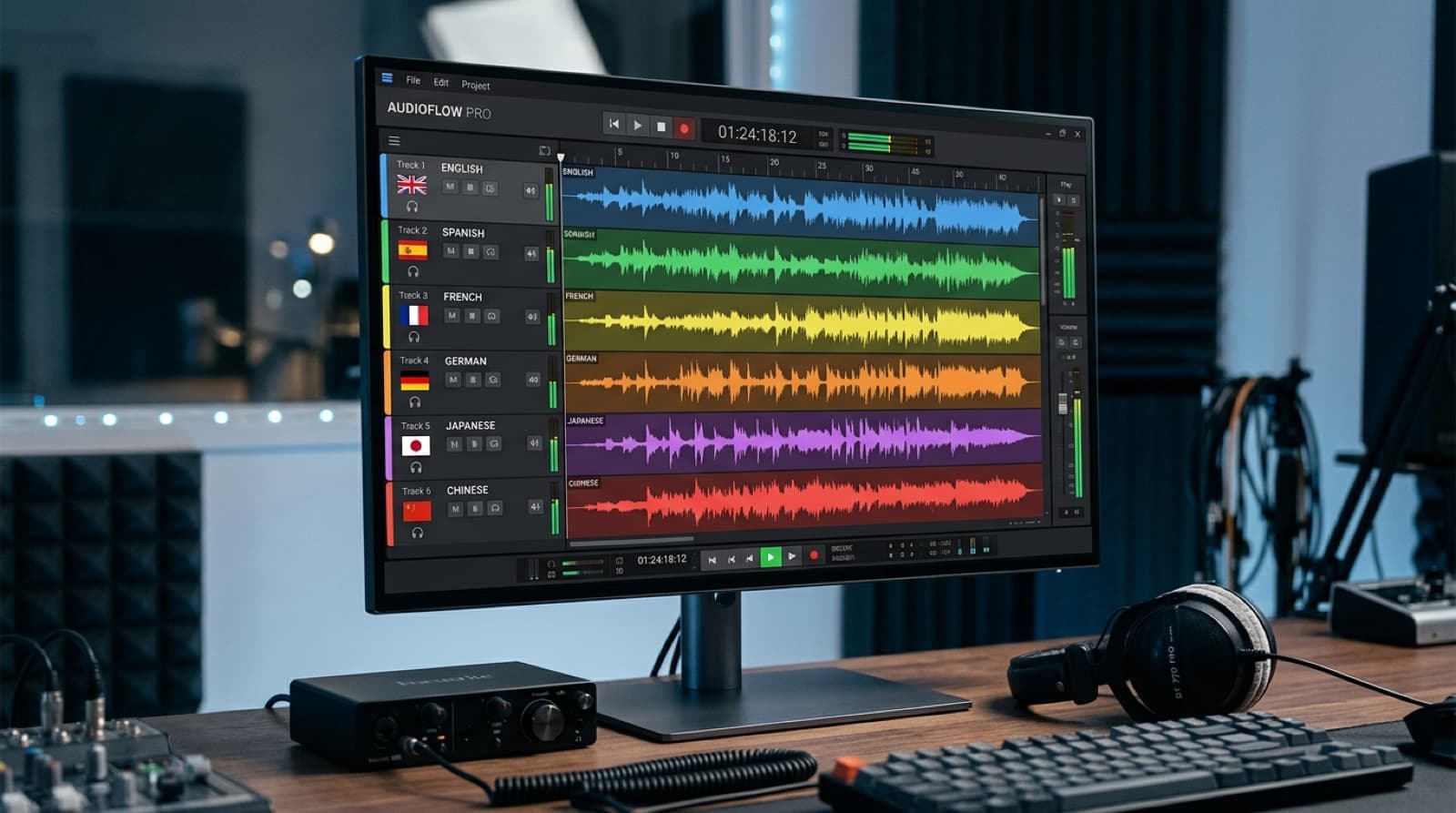
Expanding your audiobook portfolio into international markets used to require massive budgets and weeks in recording studios. Today, AI-powered localization tools allow you to seamlessly translate and re-voice your content, unlocking global distribution in days instead of months.
Inhaltsverzeichnis
- The Global Growth of Multilingual Audiobooks
- Traditional Studio Recording vs AI-Powered Translation Costs
- Step-by-Step: How to Localize Your Audiobook with AI
- Distribution Strategies: Going Exclusive vs Going Wide
- Quality Control and Refining the Multilingual Listener Experience
- Häufig gestellte Fragen
- Quellen
Wichtige Erkenntnisse
- The global translated audiobook market is expanding rapidly, projected to grow at a strong 12.7% CAGR.
- Traditional human studio dubbing can cost $5,000 to $15,000 per book, whereas AI translation tools lower production costs by up to 90%.
- Choosing non-exclusive distribution via platforms like Findaway Voices lets you expand to over 30 global stores without 7-year lock-ins.
- AI dubbing platforms like Dictem Studio translate and clone voices to preserve your narrator's original tone in over 100 languages.
The Global Growth of Multilingual Audiobooks
The global audiobook landscape is experiencing an unprecedented surge, transforming how publishers, podcasters, and content creators distribute their intellectual property. As domestic markets reach high saturation, scaling into international territories has shifted from a secondary luxury to a primary growth vector. According to recent market intelligence, the global translated audiobook distribution market has reached a valuation of 2.72 billion USD and is projected to expand at a compound annual growth rate (CAGR) of 12.7 percent through 2034[1]. This robust growth signals a massive opportunity for content teams willing to venture beyond their native language boundaries.
High-Opportunity Target Languages and Regional Habits
When expanding internationally, a generic translation approach is rarely effective. Listener habits vary widely across different geographical markets, and understanding these cultural nuances is essential for successful adoption. By identifying high-opportunity languages, creators can strategically target regions where audiobook consumption is growing fastest. For instance, the demand for localized audio content is booming across Europe and Latin America, driven by shifting commuter patterns and the widespread use of mobile streaming platforms.
| Target Language | Key Regional Markets | Listener Preferences and Habits |
|---|---|---|
| Spanish | Latin America, Spain, US Hispanic | Prefers localized voice synthesis or dubbing over text translation, showing a strong interest in educational and fiction genres. |
| German | DACH region (Germany, Austria, Switzerland) | Demands exceptionally high audio production quality, with a strong focus on precise narrative pacing and clear pronunciation. |
| French | France, Canada, Francophone Africa | Rapidly growing adoption among younger demographics, with a heavy emphasis on serialized stories and dramatic non-fiction. |
Bypassing the Traditional Studio Bottleneck
Historically, launching a multilingual audiobook catalog was a slow, expensive venture. Publishers had to hire native-speaking voice actors, rent physical studios, and manage weeks of manual post-production for every single target language. This process often cost thousands of dollars per title and delayed releases by several months. Today, forward-looking content teams are bypassing these friction points entirely by implementing an agile localization-first strategy that leverages advanced voice synthesis.
By utilizing modern AI-driven solutions like Dictem Studio, publishers and video creators can translate, re-voice, and adapt their original audio files into over 100 languages in a fraction of the time. This tech-driven shift enables creators to retain the emotional resonance of the original speaker through advanced voice cloning. When paired with non-exclusive wide distribution models, these automated workflows allow teams to release high-quality, multilingual editions on global platforms in days rather than months. This strategy fundamentally changes the economics of audiobook localization, turning a previously cost-prohibitive chore into an easily scalable engine for global audience growth.
Traditional Studio Recording vs AI-Powered Translation Costs
For audiobook publishers, podcasters, and media companies, entering new international markets has historically been a privilege reserved only for massive budgets. Translating an audiobook or a premium audio series requires far more than converting text on a page. The traditional voice production process is slow, expensive, and logistically complex. Publishers who want to distribute their work globally must navigate an extensive chain of studio production steps before a single translated file can go live. Embracing a modern localization-first approach can change this paradigm entirely, enabling creators to scale without massive upfront risks.
The High Toll of Traditional Recording Studios
To produce a high-quality translated audiobook, the traditional approach relies heavily on physical studio spaces and a rotating cast of specialized professionals. For every target language, publishers must hire professional voice actors, rent physical recording booths, and retain sound engineers, translators, and directors to mix the final audio. This process is highly linear, slow, and expensive. Industry benchmarks reveal that a typical one-hour audio file can cost between $5,000 and $15,000 to translate and record using professional studio processes in just a single target language[2]. When scaling content across multiple regional markets, such as Spanish, French, and German, these costs quickly multiply to between $20,000 and $60,000, not including the immense operational overhead of managing multiple project timelines[2].
Unlocking 90% Cost Savings with AI Workflows
By moving away from physical studio setups toward AI-driven translation, content creators can bypass traditional project management bottlenecks and realize immense financial benefits. AI-native translation platforms reduce manual labor, eliminating the need for complex studio bookings and multi-week scheduling windows. Statistics indicate that leveraging artificial intelligence can deliver cost savings of approximately 90% compared to traditional recording processes[2], while providing access to natural-sounding multilingual voiceovers across different regional accents. Instead of paying thousands of dollars per language, audiobook publishers can generate translated files for a fraction of the cost, making it feasible to publish non-exclusive multilingual editions in days instead of months.
This is where platforms like Dictem come into play. Tools such as Dictem Studio allow publishers, video creators, and podcasters to translate and re-voice their audio in over 100 languages. Rather than managing complex, sequential casting workflows, publishers can quickly translate their catalog into multiple languages simultaneously. Utilizing a comprehensive guide to audiobook localization helps creators navigate the shift toward automated translation workflows without sacrificing the emotional depth or vocal quality of the original recording.
| Production Aspect | Traditional Studio Recording | AI-Powered Translation |
|---|---|---|
| Average Cost (per audio hour) | $5,000 to $15,000 per language | A few hundred dollars per language |
| Average Production Speed | 2 to 4 weeks per language | A few hours or days for multiple languages |
| Primary Resource Needs | Voice talent, studio space, sound engineers, directors | AI translation software with standard QA editing |
| Language Capabilities | Highly sequential and expensive | Simultaneous localization in 100+ languages |
While high-stakes projects like feature films may still require traditional studio acting to capture extreme dramatic performances, publishers and content teams looking to localize non-fiction audiobooks, corporate training, and podcast episodes can now scale their catalogs globally in days. Combining the power of AI voice cloning with widespread distribution platforms turns global expansion from a budget-busting risk into an accessible, repeatable strategy.
Step-by-Step: How to Localize Your Audiobook with AI
Expanding your audiobook catalog into new global markets used to require an astronomical budget and months of studio time. Traditional studio dubbing typically ranges from 5,000 to 15,000 USD per language for a standard audiobook, with turnaround times extending over several weeks or even months[2]. To scale globally without these traditional overhead costs, publishers and content teams are adopting a localization playbook that launches multilingual editions in days. By implementing an efficient audiobook localization workflow and combining advanced AI translation with non-exclusive wide distribution, you can bring your audio content to dozens of new regions simultaneously.
1. Transcription and Multi-Language Script Translation
The first phase of the workflow starts with converting your master audio into an accurate text script. AI-powered localization workspaces process your original audio, automatically generating highly precise timestamps and speaker identifiers. Once the transcription is complete, the workspace translates the text into your target languages. Instead of raw literal translations, advanced systems adapt the text to maintain cultural nuances, idioms, and natural sentence structures. You can review and refine the translated scripts within the workspace before proceeding to the synthesis phase.
2. High-Fidelity Voice Cloning and Voice Matching
To keep the listener engaged, the translated audio must carry the same emotional weight and tone as the original performance. Modern AI technology makes this possible through sophisticated voice cloning. Platforms analyze a small sample of your original narrator's voice to capture their unique timbre, pacing, and emotional range. The system then replicates these voice characteristics in the target language. This ensures that the cloned voice sounds like the original author or voice actor, which is crucial for maintaining consistent branding across your global channels.
3. Audio Editing and Audio Packaging with Dictem Studio
Once the translations and voices are configured, the next step is synthesis and synchronization. Utilizing specialized platforms like Dictem Studio, creators can translate, re-voice, and package audiobooks into over 100 languages. This modern process of implementing multilingual voiceovers allows publishers to oversee the entire production in a single workspace. The software automatically syncs the new voiceover with the original timing, managing pause lengths and speech rates. You can preview individual sentences, swap voices, adjust pronunciations, and fine-tune the mix. Once finalized, you can export high-quality audio files that meet the strict technical standards of major distribution platforms.
| Metric | Traditional Studio Dubbing | AI-Powered Localization |
|---|---|---|
| Cost per Language | 5,000 USD to 15,000 USD | Up to 90 percent savings |
| Production Timeline | 2 to 6 weeks per language | Same day or a few days |
| Voice Consistency | Requires casting new actors | Voice cloning maintains original voice |
| Scaling Capacity | Highly limited by physical booking | Simultaneous translation into 100 plus languages |
Distribution Strategies: Going Exclusive vs Going Wide
When taking your audiobooks into international markets, choosing the right distribution strategy is just as critical as the translation process itself. For years, the default route for independent creators and publishers has been to sign exclusive distribution agreements with Amazon's ACX, locking their audio content to Audible and Amazon in exchange for a higher royalty percentage. However, when you begin scaling your content across multiple languages, this exclusive mindset can quickly turn into a growth barrier. If you plan to translate your content for new audiences, implementing a structured audiobook localization strategy requires a platform-agnostic distribution approach to maximize your global footprint.
Going exclusive with ACX pays authors a 40% royalty rate on sales, but it restricts distribution strictly to Audible, Amazon, and Apple Books[3]. For English-speaking markets, this might seem attractive due to Audible's historic market dominance. But if you want to reach listeners in non-English markets, relying solely on this ecosystem is highly limiting. A non-exclusive contract with ACX drops your royalty rate on Amazon and Audible to 25%, but it frees you to distribute your audiobook files to every other major retail store, library system, and streaming subscription platform in the world[3].
To fully capitalize on international opportunities, publishing wide through an aggregator like Findaway Voices is the most effective approach. Findaway Voices distributes audiobooks to more than 30 global stores and subscription systems, including Spotify, Kobo, Storytel, and Google Play[3]. This wide approach allows you to capture international revenue streams that Amazon simply cannot reach. Furthermore, Findaway Voices does not require exclusivity to access high royalty rates on partner platforms, offering up to a 45% royalty on Apple Books even under non-exclusive terms[3].
| Distribution Model | Amazon/Audible Royalty | Global Reach | Platform Flexibility |
|---|---|---|---|
| ACX Exclusive | 40% | Audible, Amazon, Apple Books only | Low - locked into restrictive terms for up to seven years |
| ACX Non-Exclusive + Wide | 25% | 30+ international platforms (Spotify, Storytel, Kobo, etc.) | High - adapt distribution channels and update files anytime |
Why Wide Distribution is Essential for Multi-Language Audio
The primary reason to choose a wide model is the diverse nature of global listening habits. While Audible remains a powerhouse in the United States and the United Kingdom, other platforms dominate in other regions. In many European and Latin American countries, subscription-based streaming platforms like Storytel and local library networks are the primary ways users consume audiobooks[3]. Locking your translated French, German, or Spanish audiobooks into an exclusive ACX deal means you are completely cut off from the exact audiences you translated the content for in the first place.
Additionally, maintaining full control over your digital assets is crucial when localizing content. With modern AI technology, creating high-quality multilingual voiceover is now faster and more cost-effective than ever before. If you localize your audiobook using workflows like Dictem's Dictem Studio, you can launch in several target languages simultaneously. Under non-exclusive distribution terms, you retain the freedom to update audio files, adjust pricing, run promotions, and move your content seamlessly across distributors without waiting out restrictive contractual periods. This approach is a cornerstone of a scalable localization playbook, enabling content teams to build a truly global presence.
Quality Control and Refining the Multilingual Listener Experience
Transitioning from traditional, studio-bound dubbing to AI-powered workflows represents a massive leap in efficiency for audiobook publishers and content teams. While traditional dubbing can take several weeks and cost thousands of dollars per language, modern AI tools allow creators to scale their content in a fraction of the time and budget[2]. However, maintaining a high-quality, engaging listener experience requires structured post-production quality assurance. Successful audiobook localization is not just about translating words; it is about localizing the entire auditory experience. To ensure that your translated audiobook resonates with international audiences, publishers must focus on systematic quality checks that refine the final voice output before it reaches global distribution platforms.
Step 1: Building Customized Pronunciation Dictionaries
The first critical step in quality control is managing specialized terms. Audiobooks are often filled with unique character names, technical jargon, brand names, or specific geographical locations. If left unguided, automated systems may mispronounce these terms or use conflicting phonetic styles across different chapters. Setting up customized pronunciation dictionaries, or phonetic glossaries, ensures that your localization tools maintain consistency. In Dictem's workspace, publishers can leverage Dictem Studio to build custom glossaries that define exact pronunciations, ensuring that complex terminology sounds completely natural in every target language.
Step 2: Adjusting Pacing and Timing for Natural Flow
Another challenge in multilingual production is speech expansion. Different languages require different word counts and syllables to convey the exact same meaning. If left unadjusted, a translated script can lead to awkward, rushed segments or unnatural gaps in the narration. Content teams must actively adjust the pacing and timing of the translated audio tracks. Fine-tuning the duration of pauses, editing silent spaces between paragraphs, and aligning speech speed with the original dramatic performance are necessary to prevent listener fatigue and maintain the narrative flow.
Step 3: Blending AI Voice Generation with Human Proof-Listening
Finally, the most effective quality assurance models blend artificial intelligence with human proof-listening. While AI voice synthesis and voice cloning capture the original speaker's tone, emotional depth, and delivery styles, they cannot completely replace human cultural intuition. A bilingual editor or professional proof-listener should review the final audio tracks. These human reviews identify subtle linguistic nuances, awkward translations, or misplaced emotional emphases, ensuring that the final audiobook meets the premium standards of global distribution.
| Quality Control Phase | AI Automated Task | Human Oversight Task |
|---|---|---|
| Phonetic Accuracy | Applies customized pronunciation glossaries across all files. | Review complex character names and technical terms in the script. |
| Pacing and Timing | Adjusts speech speed and aligns timestamps dynamically. | Fine-tune silent pauses to preserve the original dramatic beats. |
| Emotional Review | Replicates voice tone and emotional nuance via voice cloning. | Confirm the overall performance aligns with local cultural expectations. |
Häufig gestellte Fragen
How much does it cost to translate and produce an audiobook in a new language?
Traditional studio production with voice actors and translators costs between $5,000 and $15,000 per language. However, utilizing modern AI dubbing tools cuts production costs by up to 90%, allowing creators to translate a full audiobook for a few hundred dollars.
Which platforms are best for publishing translated audiobooks wide?
Publishing wide is best managed through aggregators like Findaway Voices (by Spotify), which distribute your translated audiobooks to over 30 retail and library networks globally. Going wide avoids exclusive lock-ins and maximizes visibility in international regions where Audible is less dominant.
Can AI voices accurately replicate the original audiobook narrator?
Yes. Advanced voice-cloning technology analyzes the unique vocal signature, tone, and pacing of your original narrator. When localized via platforms like Dictem Studio, the system generates high-fidelity voice output in the target language that sounds highly natural and consistent.
How do you translate an audiobook without losing the original meaning?
AI localization systems combine automated transcription, contextual machine translation, and cultural adaptation. Translating the script in context ensures colloquialisms, idioms, and specialized terms are converted accurately before the voice-generation step begins.
Are there distribution platforms that support AI-narrated audiobooks?
Yes. Major retailers like Kobo Writing Life, Google Play Books, and Findaway Voices have clear guidelines and direct support for AI-generated and synthetic narration. This makes it easier than ever to list localized audiobooks in regional catalogs around the world.
How long does it take to translate an audiobook using AI localization?
While traditional studio translation and dubbing take weeks or even months due to talent booking and sequential recording sessions, AI platforms can translate, re-voice, and package a full-length audiobook in hours or days, speeding up global publishing timelines.
Quellen
Ready to go global?
Translate, re-voice, and package your content for every language, with Dictem.
Open Dictem Studio