Raising Bilingual Kids With Songs in Two Languages
David Okafor
Product Marketing
June 7, 2026
8 min
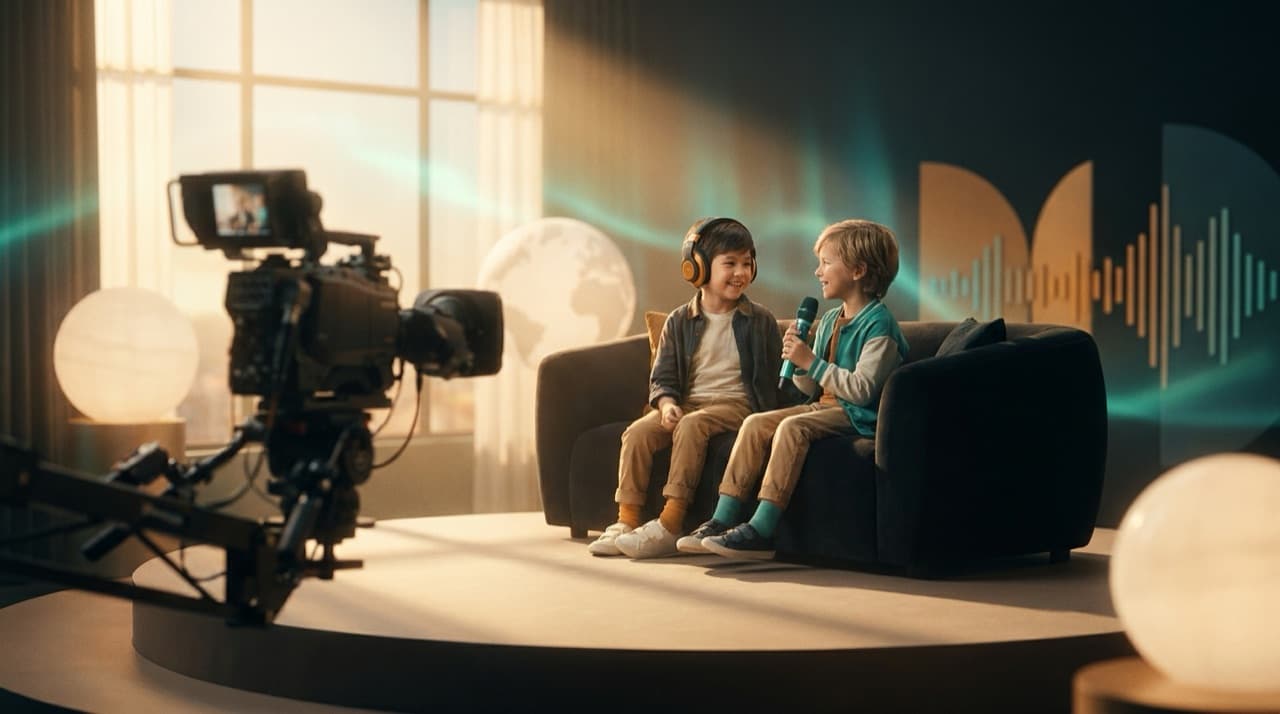
The sweet melody of a lullaby or the catchy rhythm of a nursery rhyme holds a special place in every child's development. Music captivates young minds, stimulates creativity, and aids in emotional expression. But what if these joyful tunes could also be a powerful secret weapon in raising bilingual children? In today's interconnected world, equipping kids with a second, or even third, language offers incredible cognitive, cultural, and social advantages. And when it comes to early language acquisition, songs in two languages are a goldmine.
This article will explore the profound benefits of integrating music into bilingual education, provide practical strategies for introducing songs in multiple languages, and show you how innovative tools can make this journey even more harmonious.
The Unbeatable Power of Music for Language Acquisition
Music and language are intrinsically linked in the brain. Think about it: both involve rhythm, pitch, tone, and pattern recognition. For young children, who are natural sponges for new information, this connection is particularly potent.
Here's why music is such an effective tool for teaching languages:
- Repetition Without Boredom: Songs inherently involve repetition, which is crucial for memorizing new vocabulary and grammatical structures. The melodic aspect makes this repetition enjoyable and less tedious than rote drilling.
- Enhanced Memory and Recall: Studies have shown that information presented in a musical format is often easier to remember. Melodies act as mnemonic devices, helping children recall words and phrases more readily.
- Pronunciation and Rhythm Practice: Singing helps children articulate sounds, practice intonation, and internalize the natural rhythm of a language in a relaxed, playful way. They learn to mimic native speakers without conscious effort.
- Emotional Connection: Music evokes emotions, creating positive associations with the learning process. When children enjoy learning, they are more likely to stick with it and achieve fluency.
- Vocabulary Expansion: Songs often tell stories or describe actions, exposing children to new words in context. Action songs, for example, directly link words to movements, reinforcing understanding.
- Reduced Inhibition: For shy children, singing along can be less intimidating than speaking directly. It provides a low-pressure environment to experiment with new sounds and words.
Incorporating songs in two languages from an early age can lay a strong foundation for bilingualism, making the process feel natural and fun rather than like a chore.
Strategies for Introducing Songs in Two Languages
Making music a part of your child's bilingual journey doesn't require a music degree or perfect fluency. It just needs consistency, creativity, and a dash of enthusiasm.
Here are some actionable strategies:
- Start Early, Stay Consistent: Begin exposing your child to songs in both languages as early as infancy. Even if they don't understand the words, they absorb the sounds, rhythms, and intonation patterns. Regular, consistent exposure (a few songs daily) is far more effective than infrequent, long sessions.
- "One Song, Two Languages" Approach: A highly effective method is to sing the same song in both languages. This helps children connect concepts and vocabulary across languages. For instance, sing "Twinkle, Twinkle Little Star" in English, and then "Estrellita, ¿dónde estás?" in Spanish. The familiar melody provides comfort and aids in understanding the new words.
- Contextualize the Music: Tie songs to daily routines and activities. Sing a "Good Morning" song in one language and a "Bath Time" song in another. This creates natural associations and reinforces practical vocabulary.
- Make it Playful, Not Academic: The goal is enjoyment, not perfect grammar. Let your child lead, dance along, and make up silly verses. The more fun it is, the more engaged they will be. Don't correct every pronunciation mistake; focus on celebrating their participation.
- Utilize Different Channels: Mix it up. Sometimes sing together, other times listen to recordings. Use video clips with lyrics for visual learners. Exposure through various mediums keeps interest high.
Choosing the Right Songs and Resources
The sheer volume of children's music can be overwhelming. Focus on quality, relevance, and engagement when selecting songs for your bilingual learners.
- Simple and Repetitive: Nursery rhymes, folk songs, and simple children's tunes are ideal. Their straightforward lyrics and repetitive structures make them easy to grasp and remember.
- Action Songs and Fingerplays: Songs that involve hand gestures or full-body movements (e.g., "Head, Shoulders, Knees, and Toes" or "The Wheels on the Bus") are fantastic for kinesthetic learners. They help children associate words with physical actions, deepening comprehension.
- Culturally Relevant Songs: Introduce songs that are popular in the target language's culture. This not only teaches language but also fosters an appreciation for cultural diversity. Look for songs that celebrate holidays, traditions, or common cultural experiences.
- Leverage Technology (Wisely): Online platforms like YouTube, Spotify, and dedicated language learning apps offer vast libraries of children's songs in multiple languages. However, quality can vary.
- Dictem (dictem.com) for Seamless Localization: This is where an innovative platform like Dictem can be a game-changer. Imagine your child's favorite song, perhaps a beloved tune from your own childhood, magically available in another language, perfectly re-voiced by AI, and critically, with the rhyme and melody preserved. Dictem specializes in content localization, ensuring that songs translated into other languages remain singable, maintaining their original musicality and lyrical charm. You don't have to hunt for an equivalent song; Dictem can create one from your existing content, turning one song into 80+ languages, providing a podcast-ready MP3, and even a marketing pack. This means you can provide your child with high-quality, culturally appropriate, and musically accurate versions of songs they already love, bridging the language gap effortlessly.
Making it Interactive and Engaging
Passive listening is a start, but active engagement truly ignites language learning.
- Sing Along Enthusiastically: Your enthusiasm is contagious. Sing with gusto, even if you're not a professional singer. Your child will mimic your joy and participation.
- Incorporate Gestures, Dances, and Props: Bring songs to life! Use puppets, stuffed animals, or simple household items as props. Encourage your child to create their own dance moves or actions for the song.
- Picture Books and Songbooks: Many children's songs have accompanying picture books. Point to the illustrations as you sing the words. This visual aid is powerful for vocabulary building.
- Creative Play and Role-Playing: After singing a song about animals, set up a "farm" with toys and have your child identify the animals by their names in both languages. Extend the song's theme into imaginative play.
- Family Song Time: Designate a special "song time" each day or week where the whole family sings together. This makes language learning a shared, joyful experience, reinforcing its importance.
Overcoming Common Challenges
Even with the best intentions, you might encounter hurdles.
- Child Resistance: If your child seems uninterested, don't force it. Try a different song, a different language, or a different approach. Make it playful, not a command. Sometimes, a break and a fresh start later can reignite their interest.
- Finding Quality Resources: As mentioned, quality content is key. If you're struggling to find native-level, singable versions of songs in your target languages, remember that platforms like Dictem offer a solution by localizing existing songs with preserved melody and rhyme.
- Parental Pronunciation Concerns: Many parents worry they aren't fluent enough to teach perfect pronunciation. While exposure to native speakers is ideal (which Dictem's re-voiced audio can provide), your consistent effort and enthusiasm are more important than perfect accents. Children are incredibly adaptable; they will refine their pronunciation over time. Focus on consistent exposure.
- Maintaining Motivation: Keep things fresh. Introduce new songs, revisit old favorites with new activities, or combine singing with storytelling or art projects. Varying the approach prevents stagnation and keeps the learning exciting.
FAQ
At what age should I start teaching my child songs in two languages?
You can start as early as possible, even from birth. Babies are remarkably adept at absorbing different language sounds and patterns. The earlier the exposure begins, the more natural and effortless the acquisition process tends to be.
Do I need to be fluent in the second language myself?
Not necessarily, but it helps. If you're not fluent, you can still facilitate learning by using high-quality resources, listening to native speakers, and learning alongside your child. Tools that provide accurate, native-speaker-level audio, like Dictem, can be invaluable for ensuring good pronunciation and intonation exposure. Your enthusiasm and consistency are more important than perfect fluency.
How can Dictem specifically help with teaching songs in two languages?
Dictem is uniquely positioned to assist by taking any song and localizing it into many languages (over 80), crucially ensuring that the translated version retains its original singability (rhyme and melody are preserved). This means you can provide your child with the same beloved song in multiple languages, complete with high-quality, re-voiced audio in a podcast-ready MP3 format. It eliminates the need to search for equivalent songs and guarantees a consistent, enjoyable musical experience across languages, simplifying the process of fostering bilingualism through music.
Start Your Bilingual Musical Journey Today
Raising bilingual children through the power of music is a rewarding endeavor, enriching their cognitive abilities, cultural understanding, and global readiness. By embracing the strategies outlined above and leveraging innovative tools like Dictem, you can create a joyful and effective pathway for your child to become a confident bilingual speaker.
Are you ready to unlock the magic of multilingual music for your family? Explore how Dictem can transform your favorite songs, podcasts, videos, and courses into a harmonious symphony of languages. Visit dictem.com today to learn more and begin your journey towards creating truly global content for your little ones.
Ready to go global?
Translate, re-voice, and package your content for every language, with Dictem.
Open Dictem Studio